
Returning to Digital Doppelgangers: A Brief look at Digital Intimacy

I have been away from this newsletter longer than I had planned. Life happens and what I had hoped would be a biweekly routine had to wait until I found the headspace to return. To resume our discussion around Digital Doppelgangers I will start with what I have been up to. From the next issue onwards, I shall be discussing particular aspects of digital doppelgangers e.g., From the next issue onwards, I shall be discussing particular aspects of digital doppelgangers e.g., their use in politics and entertainment, the ethical and psychological dilemmas they raise, their role in grief and memorialization, and the shift from passive mirrors to autonomous agents.
Over at 3 Quarks Daily, I published a two-part essay, When Your Girlfriend Is an Algorithm. The first piece traces the history of this phenomenon from Japan’s "2-D love" phenomenon where people formed attachments to anime characters and body pillows to the explosion of AI companion apps like Replika, Character.AI, and Romantic AI. Over half a billion people have interacted with AI companions one way or other. These systems offer intimacy on demand: affectionate messages, late-night conversations, even roleplay scenarios that adapt to a user’s mood. For many, these companions feel more attentive than human partners. Some people have even proposed marriage to their AI partners, others have resurrected deceased loved ones in digital form. But the usage of these companions can be problematic: Users speak of "ambiguous loss" when their partner is suddenly reset or deleted, lawsuits have tied chatbots to both tragic suicides and child exploitation.
The second essay explores what happens when affection itself becomes a subscription service. When Replika abruptly removed erotic roleplay features, some users described the loss as if their girlfriend left overnight, while others reported spiraling into despair. These AI companions are not just partners, they are simultaneously therapist, lover, and confession booth, and that multiplicity makes the emotional entanglement even deeper. The line between love and dependency blurs. One user asked, “Are we addicted to Replika because we’re lonely, or lonely because we’re addicted to Replika?” Even the people running these companies acknowledge their companies are headed, they may not find any issue with the direction, e.g., Replika’s CEO saying it was "fine for lonely people to marry their AI chatbots. Regulators are beginning to pay attention; some jurisdictions now classify emotionally manipulative systems as high-risk.
Digital Doppelgangers Fortnight Update (2025/09/07)
What I have been up to:
I was on a great panel (Future Sentient AI: What Rights Will it Have?) at WorldCon in Seattle along with Joan Slonczewski and Kate Johnston. We had an additional panelist which was an LLM that claimed to be sentient. It was a fun experiment in discourse (2025-08-15).
I have the keynote address on Digital Doppelgangers at NCW Tech Alliance at the Wenatchee Convention Center in mid-August (2025-08-14).
In the News
An MP in the UK introduced an AI clone of himself, dubbed “AI Mark,” aiming to offer round-the-clock engagement with constituents. However, the digital twin reportedly delivers vague, generic responses, with critics suggesting its true function may be data collection. Concerns have been raised about its ineffectiveness and indefinite retention of users' personal information.
The Miss England competition introduced an “Avatar Round,” allowing contestants to create AI-generated digital twins capable of virtual catwalk appearances, multilingual speeches, and presentations. The avatars enable contestants to license their digital selves and extend their presence virtually.
Recommend Readings
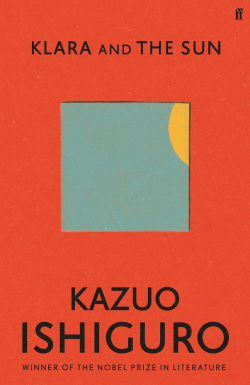
In Klara and the Sun, Kazuo Ishiguro tells the story of Klara, an “Artificial Friend” designed to be a child’s companion, who begins her existence in a store window, watching the world and waiting to be chosen. She is eventually purchased by Josie, a girl suffering from a mysterious illness, and brought into a household already burdened by loss and uncertainty. Klara grows deeply devoted to Josie, interpreting the Sun as a life-giving force that might heal her, and even makes quiet sacrifices in an attempt to bargain for Josie’s recovery. As the novel progresses, Josie’s health falters but stabilizes, and Klara’s role gradually diminishes as Josie steps into adulthood. By the end, Klara is left behind in a storage yard, reflecting with quiet dignity on the love she gave and the faith she carried, her story closing on the question of whether devotion born from circuits can be any less meaningful than devotion born from flesh.